
Sisal Carpet Cleaning: 10 Common Mistakes to Avoid
Sisal is one of the most durable natural fiber carpets you can put in a home, but it’s also one of the most misunderstood when it comes to cleaning. Because sisal looks similar to other natural fibers and behaves differently from synthetic carpet, a lot of everyday cleaning habits that work fine elsewhere can actually damage it. Sisal carpet cleaning requires a slightly different approach — and getting it wrong is one of the most common reasons a good carpet starts looking worn out well before it should.
Here are the ten mistakes we see most often, and what to do instead.

1. Using Too Much Water
Sisal fiber absorbs water quickly and dries slowly compared to synthetic materials. Soaking a stain or over-wetting the carpet during cleaning is one of the fastest ways to cause discoloration, staining rings, or even fiber damage. Proper sisal carpet cleaning always uses minimal moisture — a barely damp cloth is usually enough, not a soaked one.
2. Rubbing Instead of Blotting
The instinct to scrub a spill is strong, but rubbing pushes liquid and dirt deeper into the fiber and can fray the weave. Always blot from the outer edge of a spill toward the center, using a clean, dry cloth, and replace it as it absorbs moisture rather than continuing to rub the same spot.
3. Using Steam Cleaners
Steam cleaning is common practice for synthetic carpet, but it’s one of the worst things you can do to sisal. The combination of heat and moisture can cause the fibers to swell, discolor, or even shrink unevenly. If you’re used to steam cleaning your other carpets, sisal needs to be treated as the exception, not the rule.
4. Ignoring Spills Until Later
Sisal is far more forgiving when a spill is treated immediately. The longer a spill sits, the more it soaks into the fiber and the harder it becomes to remove without leaving a mark. A quick response — blotting within the first minute or two — makes a significant difference in how well the stain lifts.
5. Using Harsh or Acidic Cleaning Products
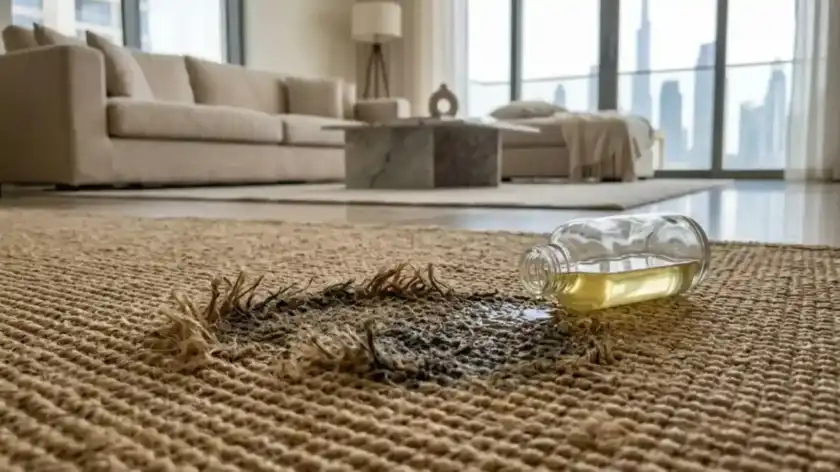
Many all-purpose carpet cleaners are formulated for synthetic fibers and contain chemicals that are too harsh for natural materials. Acidic or heavily fragranced cleaning products can discolor sisal or break down the natural fibers over time. Stick to mild, natural-fiber-safe solutions — a diluted vinegar-water mix is usually sufficient for most everyday stains.
6. Vacuuming with Too Much Suction
It seems counterintuitive, but aggressive vacuuming can actually damage sisal over time by pulling at the weave and loosening fibers, especially with a beater-bar attachment designed for plush synthetic carpet. Use a low-suction setting or a vacuum with a natural-fiber setting, and avoid rotating brush heads directly on the sisal surface.
7. Skipping Regular Maintenance
A common mistake is only cleaning sisal when something visibly goes wrong — a spill, a stain, noticeable dust buildup. In practice, regular light vacuuming (once or twice a week) prevents dirt and grit from working into the fibers in the first place, which is far easier than removing it after the fact. This matters even more in high-traffic areas like a stair carpet installation, where dirt tends to accumulate fastest.
8. Not Testing Cleaning Products First
Sisal can react differently depending on the specific weave, treatment, and dye used. A cleaning product that works fine on one sisal carpet might cause discoloration on another. Always test any cleaning solution — even a mild one — on a small, hidden section of the carpet first, and wait to see how it reacts before treating a visible area.
9. Letting the Carpet Stay Wet
After any wet cleaning, sisal needs to dry fully and quickly. Leaving it damp — especially in a humid environment or an area with poor airflow — can lead to mold, mildew, or a musty smell that’s difficult to remove afterward. Use fans or open windows to speed up drying, and avoid walking on the carpet or replacing furniture until it’s completely dry.
10. Treating Every Sisal Carpet cleaning the Same Way
Not all sisal carpets are built the same. A lighter-weight sisal rug, a dense wall to wall carpet dubai installation, and a commercial-grade office carpet dubai product can all have different weave densities, treatments, and backing materials — which means they don’t all respond to cleaning the same way. What’s safe for one might be too aggressive for another. When in doubt, it’s worth checking with your supplier or a professional cleaner rather than assuming a one-size-fits-all approach.
When to Call in Professional Cleaning
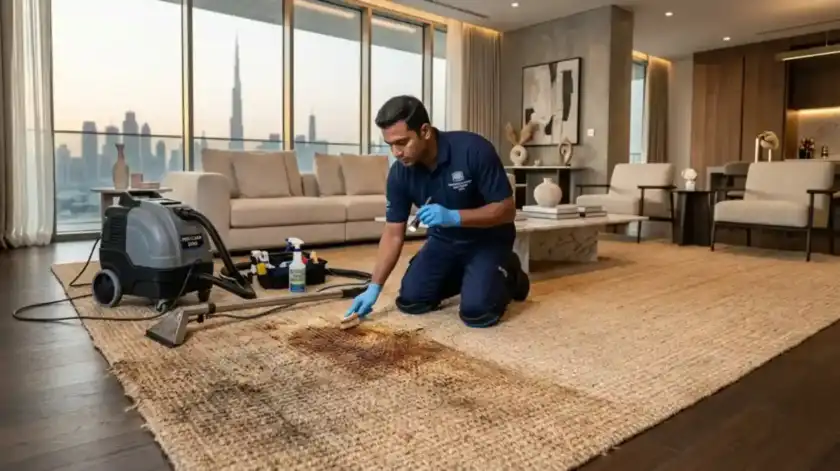
Most everyday spills and light dirt can be handled with the basic care outlined above. But a few situations call for professional help rather than DIY treatment:
-
- A stain has set for an extended period and household methods aren’t lifting it
- Dye transfer or discoloration has occurred and needs specialized treatment
- A large area needs deep cleaning rather than a spot treatment
- The carpet is a higher-value, natural fiber installation like a wall-to-wall sisal floor, where the wrong technique could cause lasting damage
Getting professional sisal carpet cleaning at this stage is almost always cheaper than replacing a carpet that’s been damaged by an overly aggressive DIY attempt.
Frequently Asked Questions
Keeping Your Sisal Carpet Looking Its Best
Sisal is a genuinely durable, long-lasting material when it’s cared for correctly — the mistakes above are avoidable, and avoiding them is really the whole secret to keeping a sisal carpet looking good for years rather than months. Gentle, prompt, low-moisture cleaning paired with regular light maintenance will keep the natural texture and color of the fiber intact far longer than reactive, heavy-handed cleaning ever will.
At Sisal Carpets Dubai, we supply and install sisal carpets, rugs, and wall-to-wall flooring built to handle everyday Dubai homes and offices — and we’re always happy to advise on the right care routine for your specific installation. If you’re unsure about a stain, a cleaning product, or general maintenance, reach out to our team before trying something that could do more harm than good.