How to Choose the Best Carpet for Your Stairs
A staircase is more than a way to move between floors. It is an important part of your home’s interior design and one of the most frequently used walking surfaces. Choosing the right stair carpet dubai can improve the appearance of your staircase, make each step more comfortable and help reduce noise from everyday movement.
For homeowners in Dubai, selecting a suitable carpet involves considering the material, staircase design, foot traffic, maintenance requirements and installation method. A carpet that looks beautiful in a showroom may not be the best choice for a busy family home or a commercial property.
Whether you are updating a villa staircase, furnishing an apartment or improving the entrance to an office, this guide explains how to choose a stair carpet that combines style, durability and practical performance.
Why Should You Install a Stair Carpet?
Stair carpets can improve both the appearance and functionality of a staircase. The right material and installation method can make a noticeable difference to how the stairs look and feel.
Improve Comfort Underfoot
Hard staircase surfaces such as wood, stone and tile can feel firm underfoot. Carpet introduces a softer surface that can make climbing stairs more comfortable.
The amount of cushioning depends on the carpet pile, underlay and overall construction. Choosing an appropriate combination helps create a comfortable surface without making the steps unnecessarily bulky.
Help Reduce Staircase Noise
Footsteps on hard surfaces can create noticeable noise, particularly in multi-storey homes and apartments. Carpet can help absorb some impact sound and reduce the noise associated with everyday movement.
The level of sound reduction depends on the carpet, underlay, staircase construction and surrounding materials.
Enhance Interior Design
Stair carpets are available in different textures, colours, patterns and finishes. A neutral carpet can complement a modern interior, while a patterned runner can become a decorative feature.
You can choose a design that matches your flooring, wall colours, furniture and overall interior style.
Provide Additional Traction
A properly selected and securely installed carpet can provide a more textured walking surface than some smooth flooring materials. However, carpet alone does not guarantee safety.
The correct carpet, suitable underlay and secure installation are important, especially on frequently used staircases.
Choose the Right Stair Carpet Material
The material you choose affects the carpet’s appearance, durability, texture and cleaning requirements. Before ordering, consider how often the staircase is used and whether you prefer natural fibres or synthetic materials.
Sisal Stair Carpets
Sisal is a natural fibre made from the leaves of the agave plant. It has a distinctive woven texture and a structured appearance that suits many contemporary and traditional interiors.
Sisal can be a practical option for staircases because its firm texture is well suited to areas where appearance and everyday use both matter.
Benefits of sisal stair carpets include:
- A natural, textured appearance.
- A range of woven styles and neutral colours.
- A structured surface suitable for many interior designs.
- An option for homeowners who prefer natural-fibre flooring.
However, sisal is not ideal for every environment. Natural fibres can be sensitive to moisture and may be more difficult to clean after certain spills. Review the manufacturer’s care instructions before choosing sisal for your staircase.
Jute Stair Carpets
Jute is another natural fibre known for its warm appearance and textured finish. It can complement relaxed, natural and contemporary interiors.
Jute often has a softer feel than sisal, making it appealing to people who prefer a less coarse texture.
However, jute is relatively absorbent and may be less suitable for staircases exposed to frequent spills or heavy wear. Consider the amount of foot traffic and the level of maintenance you are prepared to provide.
For a busy staircase, compare the specific construction and durability of the available jute products before making a decision.
Nylon Stair Carpets
Nylon is a synthetic fibre commonly used in residential and commercial carpeting. It is valued for its resilience and ability to handle regular foot traffic, although performance varies by product.
Nylon stair carpets may be suitable for busy family homes, apartment buildings and office environments.
Depending on the product, they can offer:
- Good resilience under repeated use.
- A variety of colours and patterns.
- Options designed for easier stain maintenance.
- Different pile styles to suit various interiors.
Check the manufacturer’s specifications for wear resistance, stain protection and cleaning requirements.
Polyester and Polypropylene Stair Carpets
Polyester and polypropylene are additional synthetic options worth considering when comparing stair carpets.
Polyester is available in many colours and textures and may suit homeowners looking for a particular decorative appearance.
Polypropylene is used in various carpet products and can offer practical moisture and stain resistance depending on its construction and treatment.
Neither material should be judged by fibre type alone. Compare the complete product, including pile density, backing, suitability for stairs and expected traffic levels.
Which material is best? Sisal may suit homeowners who prefer a natural, structured finish. Jute offers a softer natural look, while nylon and other synthetic options can be useful for busy staircases. Your ideal choice depends on your priorities and the product specifications.
Decide Between a Stair Runner and Full Stair Coverage
Before selecting a carpet, decide how much of the staircase you want to cover.
Stair Runner Carpets
A stair runner covers the central portion of each step while leaving some of the original staircase visible along the sides.
Runners are popular because they combine decorative appeal with the appearance of the existing flooring.
They can work particularly well on wooden staircases, where the contrast between the carpet and exposed timber creates an elegant finish.
Runner carpets can also be customised to suit the staircase width, carpet design and preferred border style.
Full Staircase Carpet Coverage
Full coverage extends across most or all of the usable stair surface, depending on the installation design.
This approach can create a consistent appearance throughout the staircase and conceal more of the underlying surface.
Full coverage may be suitable for homeowners who prefer a continuous carpeted look or want to coordinate their stairs with carpeted rooms and hallways.
Before choosing either option, consider your staircase material, interior design, maintenance preferences and installation requirements.
Select a Colour and Pattern That Matches Your Interior
The colour of your stair carpet can influence the appearance of your entire staircase. A suitable design can complement existing flooring, furniture and wall finishes.
Neutral Colours for a Timeless Look
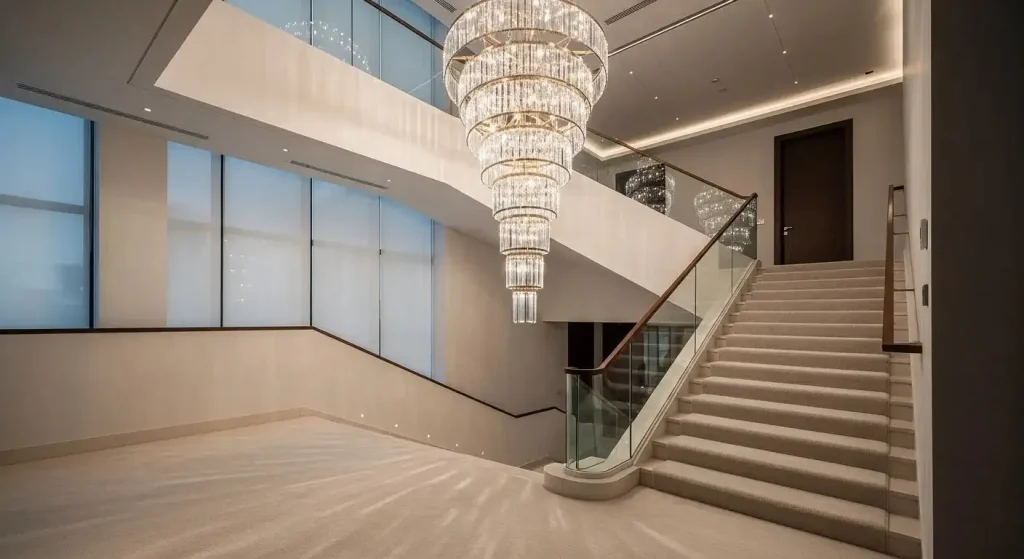
Beige, cream, taupe and grey are versatile choices for many homes in Dubai. They can complement wood, marble, painted walls and contemporary furniture.
Neutral shades also make it easier to coordinate the staircase with future interior updates.
Patterns for Visual Interest
Striped, geometric and other patterned carpets can add character to a staircase. Depending on the design, stripes may emphasise the direction of the stairs, while smaller patterns can create a more detailed appearance.
When selecting a pattern, consider how it will look across individual treads, risers and any curved sections.
Darker Shades for Busy Areas
Darker colours may help disguise some everyday marks, although dust, lint and certain stains can still be visible.
The best colour depends on the carpet material, lighting conditions and your cleaning routine.
If possible, review a fabric sample in the actual staircase lighting before making a final decision.
Consider Durability and Daily Foot Traffic
Staircases often experience repeated use, making durability an important consideration.
A staircase in a busy family home may need a different carpet from one in a guest room or a lightly used office.
When comparing products, consider the following factors.
Pile construction: The pile should suit the expected traffic and staircase design. Low-profile options can be practical where a firm, consistent surface is preferred.
Fibre resilience: Different fibres respond differently to repeated pressure. Review the manufacturer’s performance information rather than relying on appearance alone.
Edge finishing: Bound or properly finished edges can help prevent fraying on runner carpets.
Backing and underlay: The correct backing and installation system help the carpet remain secure and suitable for the staircase.
Maintenance requirements: Consider how easily the material can be vacuumed and whether it requires specialist cleaning.
Choosing a carpet according to actual usage can help you avoid paying for features you do not need or selecting a product that is unsuitable for the environment.
Measure Your Staircase Before Ordering
Accurate measurements are essential when ordering a stair carpet, especially if the staircase includes unusual dimensions, turns or curved sections.
Incorrect measurements can lead to visible gaps, uneven coverage or unnecessary material waste.
How to Measure a Straight Staircase
Start by measuring the width of each step or confirming that all steps share the same dimensions.
For a runner, decide on the desired width and the amount of exposed flooring on either side.
Measure the tread, which is the horizontal surface of each step, and the riser, which is the vertical section between steps.
If the carpet will wrap around the stair nosing, include the relevant dimensions according to the intended installation method.
Record the number of steps and check whether the top landing or bottom transition requires additional carpet.
Measuring Curved or Spiral Staircases
Curved and spiral staircases require additional care because the available width and step shape can vary.
Each step may need individual measurements or a suitable template to achieve accurate fitting.
Professional measurement is particularly useful for these designs because small errors can affect the final appearance and alignment.
Before ordering, confirm the measurement method and whether installation includes the required cutting, edge finishing and fitting.
Why Professional Stair Carpet Installation Matters
Even a high-quality carpet can look untidy or become difficult to maintain if it is installed incorrectly.
Professional installation helps ensure that the carpet is measured, cut and secured according to the staircase design and the selected fitting method.
A typical installation process may include the following stages.
Step 1: Staircase Inspection
The installer checks the staircase dimensions, surface condition and overall design. This helps identify uneven areas, loose components or preparation work that may be required.
Step 2: Accurate Measurement
The staircase is measured to determine the necessary carpet dimensions. Curved steps, landings and unusual edges require particular attention.
Step 3: Carpet Preparation
The selected carpet is cut according to the agreed design. If the runner requires bound edges, the finishing should be completed using the appropriate method.
Step 4: Secure Fitting
The carpet and any suitable underlay are installed using a method appropriate for the staircase and flooring material.
The installer should check that the carpet is secure, aligned and free from loose sections that could create a trip hazard.
Step 5: Final Inspection
The finished staircase is checked for alignment, edge quality and secure fixing. The installer can also explain the recommended cleaning and maintenance routine.
For complex staircases, professional fitting can help achieve a more consistent finish than attempting to cut and position the carpet without suitable experience.
How to Maintain Your Stair Carpet
Regular care can help preserve the carpet’s appearance and reduce the accumulation of dust and debris.
Vacuum Regularly
Staircases can collect dust, hair and small particles from everyday foot traffic. Vacuum the carpet regularly using an attachment suitable for the material.
Follow the manufacturer’s recommendations, particularly for natural fibres.
Clean Spills Promptly
Deal with spills as soon as possible using the recommended cleaning method. Avoid excessive moisture on natural-fibre carpets unless the manufacturer specifically permits it.
Test cleaning products on an inconspicuous area when recommended.
Avoid Harsh Cleaning Methods
Some natural fibres can be damaged by unsuitable chemicals or excessive water. Check the care instructions before using a steam cleaner or applying a liquid cleaning product.
Inspect the Edges and Fixings
Periodically check for loose edges, lifting sections, fraying or movement in the carpet.
Arrange repairs if you notice any loose areas, particularly on the front edge of a step. Secure fitting is important for safe use.
Arrange Professional Cleaning When Needed
Depending on the carpet material and amount of use, professional cleaning may help address accumulated dirt or difficult stains. Choose a service familiar with your specific carpet fibre.
Find the Right Stair Carpet in Dubai
Choosing a stair carpet involves balancing appearance, comfort, durability and maintenance. The best solution depends on your staircase dimensions, the amount of daily foot traffic and the interior style you want to achieve.
At Sisal Carpets Dubai, you can explore stair carpet options in natural fibres such as sisal and jute, alongside synthetic materials including nylon and polyester. Available choices and suitability depend on the specific product.
If you are planning a staircase renovation, explore our stair carpet Dubai service page to learn more about custom carpet options, measurement and fitting services.
Before confirming your order, discuss the staircase dimensions, preferred material, carpet width, edge finishing and installation requirements. These details help establish a suitable design and an accurate quotation.
For a more coordinated interior, you can also consider matching the staircase runner with a hallway runner or carpet in an adjoining area.
Frequently Asked Questions
Which carpet material is best for stairs?
The best material depends on foot traffic, design preferences and maintenance requirements. Sisal provides a structured natural texture, while nylon is a synthetic option often considered for busy areas. Compare the specifications of each product before purchasing.
Are stair runners better than full carpet coverage?
Neither option is universally better. Stair runners leave part of the original staircase visible and create a decorative central strip. Full coverage provides a more continuous carpeted appearance. The right option depends on your staircase and preferred design.
Can sisal carpet be installed on stairs?
Sisal can be used for suitable indoor staircases when the carpet construction and installation method are appropriate. However, natural sisal can be sensitive to moisture and may require careful maintenance. Confirm suitability with your carpet supplier.
How do I measure stairs for carpet?
Measure the width, tread depth and riser height of the staircase, taking the nosing and any landings into account. Curved and spiral staircases may require individual measurements or templates. Professional measurement can help reduce fitting errors.
Does stair carpet help reduce noise?
Carpet and suitable underlay can help absorb some impact sound from footsteps. The result depends on the carpet construction, underlay, staircase and surrounding building materials.
How often should stair carpets be cleaned?
Vacuuming frequency depends on foot traffic and the amount of dust entering your home. Clean spills promptly and follow the manufacturer’s maintenance recommendations. Arrange specialist cleaning when required by the carpet’s condition and care instructions.
Can stair carpets be customised?
Many stair carpet solutions can be tailored to the staircase dimensions, runner width, colour, pattern and edge finish. Confirm the available options with your supplier before ordering.
Is professional installation necessary for stair carpets?
Professional installation is particularly useful for curved staircases, custom runners and carpets that require precise edge finishing. Correct fitting helps minimise loose areas, alignment problems and potential trip hazards.
Final Thoughts
A well-chosen stair carpet can improve the comfort and appearance of your staircase while complementing the rest of your interior. The key is to select a suitable material, measure carefully, choose a design that fits your home and ensure that the carpet is securely installed.
Natural fibres such as sisal and jute offer distinctive textures, while synthetic materials provide additional options for different traffic levels and maintenance preferences.
Compare your options, review the product specifications and plan the installation before making a decision. If you need a tailored solution for your staircase, visit Sisal Carpets Dubai to explore available stair carpet options and arrange a consultation.