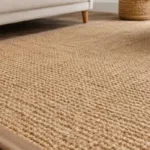
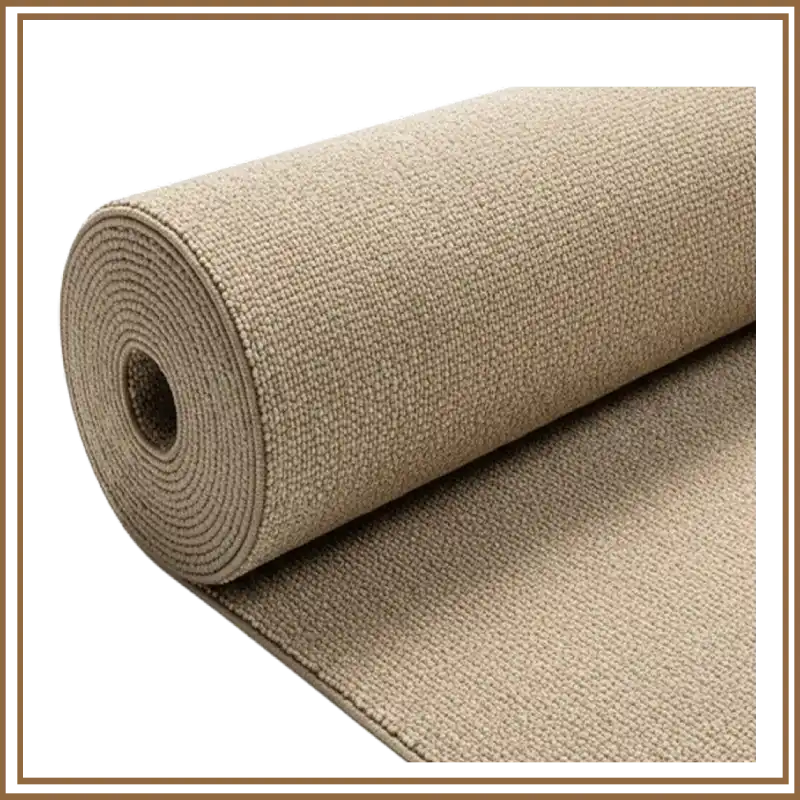
Search for a jute carpet Dubai shops stock and the pictures all tell the same story a warm golden floor, a rattan chair, soft light through linen curtains. It looks calm, and it is. What the photo can’t show is how that carpet behaves in month eight, after a humid summer, a hundred trips through the pool door and one vacuum run with the wrong attachment.
Jute is a lovely floor and a particular one. It’s softer underfoot than most natural fibres, and it’s also more porous, so it asks for a little more thought in this climate. This guide goes through what matters in the order you’ll notice it: where the carpet goes, how it’s woven and backed, how it’s measured and fitted, and how to look after it. Get those right and the carpet still looks good in a few years.
The short version: a jute carpet dubai works best in a bedroom, lounge or reading corner that stays dry and sees moderate traffic. Choose a tight weave on a stable backing, have it measured and fitted properly, keep water well away from it, and vacuum with suction only. Everything else is detail, and the detail is below.
Why jute keeps turning up in Dubai homes
Jute comes from the stem of the jute plant, which grows in warm, humid parts of South Asia. The fibre is spun into a coarse golden-beige yarn and woven into carpet. It’s natural and plant-based, and it breaks down at the end of its life, which appeals to anyone who’d rather not cover a whole floor in synthetics.
The look does the rest. Jute has a warm, earthy tone that sits comfortably with the pale stone, light wood and white walls found in so many Dubai apartments and villas. It adds texture without shouting, so it works with a modern sofa, a rattan armchair or a stack of majlis cushions. It’s also softer than its close cousin sisal, which is why people tend to pick it for rooms where they walk barefoot.
For styling ideas in living rooms and bedrooms, our post on bringing jute carpets into your decor goes into more detail.
What jute does well, and where it struggles
Every natural fibre trades one thing for another. With jute, the trade is comfort for toughness.
On the good side, jute feels soft enough for bare feet, it tends to get softer with use, and it usually costs less than a sisal carpet of similar quality. On the other side, it’s porous, so spills and marks sink in rather than sitting on top. It absorbs moisture. It fades in strong sunlight, dyed shades especially. And it wears faster than sisal where feet pass all day long.
The simplest way to decide is by room:
| Space | Good fit? | Why |
|---|---|---|
| Bedroom | Yes | Quiet traffic, bare feet and a soft feel are what jute does best |
| Living room or lounge | Yes, with a dense weave | Moderate traffic is fine. Use a defined rug under the seating if the room is busy |
| Reading corner or home office | Yes | Light use and very little moisture |
| Dining area | Maybe | Spills and dragged chairs are hard on natural fibre, so a rug is safer than a full carpet |
| Entrance hall or corridor | Usually sisal instead | Constant traffic and sand from outside wear jute faster |
| Kitchen, bathroom or laundry | No | Splashes soak in and can cause staining, shrinking and mould |
| Balcony or terrace | No | Weather and humidity call for a carpet made for outdoor use |
How Dubai’s climate treats a jute carpet
Humidity comes first. Jute takes up moisture from the air as readily as from a spill. Along the coast, summer evenings and early mornings are often very humid, and that’s when a natural fibre carpet in a shut-up room can start to feel slightly damp or smell musty. A lived-in, air-conditioned room rarely has a problem. A spare villa bedroom with the AC off for months is a different story.
Soaking is the real danger. Jute that gets properly wet can shrink, discolour or grow mould, because the fibres hold on to water. A pool door that opens straight onto the carpet, a pot plant watered over the edge and a wet mop all count.
Then there’s the sun. Strong light through large glass doors fades natural fibre over time, and dyed shades fade first. Blinds or sheer curtains on west-facing windows protect the colour, and turning a loose rug every few months keeps the fading even.
Finally, dust. Fine sand arrives on shoes and on the wind. A tight weave gives dust less room to settle and makes it far easier to vacuum out.
None of this rules jute out. It just means the room and the specification matter more here than they would in a cooler, drier country.
Weave, backing and thickness: what to ask about
Two jute carpets can look identical in a photo and behave nothing alike. The difference is how they’re made.
The weave. A tight, dense weave stands up to feet and gives dust nowhere to hide. A loose, chunky weave looks relaxed and handmade, but it traps grit, catches heels and flattens sooner where people walk. For a lounge or any room used every day, go tighter. A bedroom can take a more textured weave because traffic is light.
The backing. This is the layer underneath that holds the fibres in place and keeps the carpet stable. Backing types differ between suppliers, so ask what it is and whether it suits the floor below, whether that’s marble, porcelain tile or wood. A good one helps the carpet lie flat and resist rippling, and it matters more in busier rooms.
The thickness. A thicker carpet feels cosier, but it’s harder to finish neatly at doorways, and a chunky edge can catch on the bottom of a door. Ask for the thickness in millimetres and check your door clearance.
The grip. On polished marble or tile, a loose rug will slide unless something holds it. An anti-slip layer or rug pad keeps it put, and it also reduces friction between the fibres and the hard floor underneath.
Fitted carpet, rug or something in between
Jute can be laid in three main ways, and the right one depends on the room.
- Wall to wall: cut to the room and fitted edge to edge for a seamless look. It needs accurate measuring and careful cutting around columns and corners, and it suits bedrooms and quiet lounges best.
- A defined rug: a rectangle or round rug under the seating group, with floor showing around it. It’s easier to rotate, move or replace, which makes it the safer choice for dining areas and sunny rooms.
- Stair carpet or runner: narrow lengths for steps and corridors. These take concentrated wear, so ask for a dense weave and secure fitting.
Dubai layouts are rarely tidy rectangles. L-shaped living rooms, curved walls, structural columns, sliding doors and villa majlis spaces all call for a custom size, shape or border, and a good supplier will cut to suit rather than make you fit the carpet.
Measure the floor at its widest and narrowest points, because walls are rarely perfectly square, and note the doors, columns and steps. If you’re not sure, ask for someone to measure on site. A carpet cut a few centimetres short is an expensive mistake.
Fitting matters as much as the carpet itself. Natural fibre needs clean cuts, neatly bound edges and even tension so it lies flat without ripples. If an old carpet is coming out, ask whether removal and disposal are included and whether the floor underneath needs levelling first.
Colour and finish in strong light
Jute looks different in a bright, sun-filled lounge than it does under showroom lighting. The golden tone can read more yellow or more grey than the photo suggests, and a south or west-facing room will show it very differently at noon and at sunset.
Fading is most noticeable on dyed shades, so natural tones are the safest choice for a sunny room. If you want colour, bring it in through cushions, throws and a bordered edge instead of dyeing the whole floor.
The most reliable test is a sample. Ask for swatches, leave them on the floor where the carpet will go, and look at them in the morning, at midday and in the evening before you decide.
Jute or sisal? A quick way to decide
Jute and sisal sit side by side on most suppliers’ lists, and they suit different jobs. Pick jute when softness underfoot matters most, such as a bedroom, a reading nook or a family lounge where children play on the floor. Pick sisal when the carpet will take heavy traffic, such as an entrance, hallway or a busy living room, because it wears harder and holds up longer. Neither likes standing water. For the full comparison, including cost and moisture, read our post on sisal vs jute.
Looking after a jute carpet
Jute needs less work than most people expect, as long as it’s the right kind of work. The usual mistake is reaching for water.
- Vacuum weekly with suction only. Switch off the beater bar or rotating brush, which can drag at the fibres, and vacuum under loose rugs now and then because dust collects there
- Blot spills straight away with a dry cloth, pressing rather than rubbing
- For a stubborn mark, dab lightly with a barely damp cloth and let the area dry completely, with the air conditioning running or a fan on it
- Never soak the carpet, and skip steam cleaners and carpet shampoo, which add far too much moisture
- Avoid bleach and harsh cleaners, which weaken the fibre
- Rotate loose rugs every few months so wear and sunlight even out
- Expect a little shedding in the first weeks. Vacuum it up, and trim stray fibres with scissors instead of pulling them
Through the humid summer months, keep rooms with a jute carpet ventilated or air-conditioned instead of shut up, and check under loose rugs for dampness once in a while. If a stain won’t shift, call a specialist who cleans natural fibre. Experimenting with household cleaners usually makes it worse. Sisal and jute share most of their care rules, so our guide to sisal carpet cleaning mistakes is worth a read too.
What affects the price
Jute generally costs less than sisal of similar quality, but the final price depends on a handful of things: the size of the room, the weave, the backing, any border or custom shape, and whether fitting, an anti-slip layer and removal of an old carpet are included.
Ask for an itemised quote so you can compare two suppliers fairly, and check whether the figure is per square metre or for the finished, fitted job. A very low rate can mean a looser weave or a lighter backing, and those are the two things that decide how long the carpet lasts.
Seven checks before you pay
These apply to any jute carpet Dubai suppliers offer, including ours.
- The room. Is it dry, shaded from harsh sun and used mostly by people in bare or clean feet? If it’s a wet or very busy space, think again.
- The weave. Ask how dense it is, and see a sample rather than a photo.
- The backing. What is it, and does it suit the floor underneath?
- The colour. Look at a swatch in your own light for a full day.
- The measurements. Confirm every dimension, plus columns, doors and steps, before anything is cut.
- The fitting. Who cuts, binds and lays it, how are the edges finished, and is old carpet removal included?
- The after-care. What cleaning does the supplier recommend, and who do you call if something goes wrong?
Jute carpet Dubai FAQs: questions people ask
What is a jute carpet?
A jute carpet is a floor covering woven from fibre taken from the stem of the jute plant. It has a soft natural feel, a golden-beige tone and a relaxed texture, and it’s made as wall to wall carpet, area rugs, round rugs and runners.
Is a jute carpet suitable for Dubai’s humidity?
Yes, in dry, air-conditioned rooms such as bedrooms and lounges. Jute absorbs moisture, so avoid bathrooms, kitchens, balconies and rooms that sit shut up without air conditioning for long periods.
Is jute strong enough for a busy living room?
It copes with moderate traffic, especially in a dense weave on a stable backing. For entrances, corridors and rooms with constant foot traffic, sisal is usually the tougher option.
How do I clean a jute carpet?
Vacuum with suction only, blot spills at once with a dry cloth and let any damp patch dry fully. Don’t soak it, steam clean it or use carpet shampoo.
Why is my new jute carpet shedding?
Some shedding is normal in the first weeks. It’s loose fibre left over from weaving, and regular suction vacuuming settles it. Trim stray fibres with scissors instead of pulling them.
Does jute fade in the sun?
Yes, and dyed shades fade first. Blinds or sheer curtains on sunny windows help, and so does rotating loose rugs every few months.
Can I use a jute carpet on a balcony or near a pool?
No. Jute soaks up water and doesn’t cope with weather. For outdoor spaces, ask for a carpet made for outdoor use and check what it’s made of before you buy.
Can I order a jute carpet in a custom size?
Yes. Jute can be cut to size, shape and border for most rooms. You normally send measurements or arrange a site visit, choose the weave and colour from samples, and approve the details before cutting starts.
One last thing before you order
A jute carpet suits a quiet, dry, well-used room, and it rewards a little care. If that’s the room you have, it’s one of the nicest floors you can put in a Dubai home. If your space is busy, damp or very sunny, a different fibre or a smaller rug might serve you better, and it’s worth hearing that before you buy. Sisal Carpets Dubai supplies and fits jute carpets across Dubai in custom sizes. Send your room measurements or a photo on WhatsApp at +971 56 580 4804, or ask for sample swatches and a site visit.